How it works
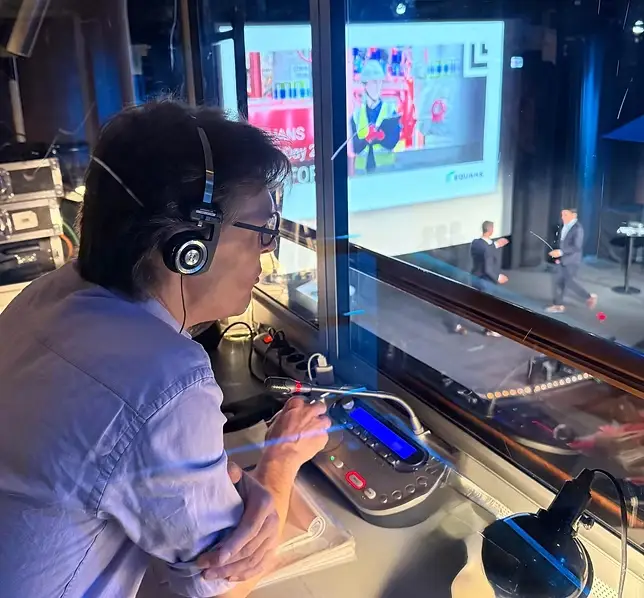
The speaker talks into a microphone. The sound reaches the interpreter's headset in a soundproof booth overlooking the room. The interpreter listens and speaks at the same time, with a two- to three-second lag. Their voice is broadcast on a radio or infrared channel that each participant picks up through a receiver and headset.
One language means one channel and one booth. A French conference translated into English and German therefore needs two booths.
Why two interpreters per booth
Simultaneous interpreting means listening, understanding, analysing and speaking at once. Research on interpreters' cognitive load shows a measurable decline in accuracy beyond about thirty minutes of continuous work, with a sharp drop around forty-five minutes.
Interpreters therefore swap every 20–30 minutes. While one works, the other stays in the booth: noting figures, checking terminology, and stepping in instantly if needed. It is a team, not a spare.
The exception: for an assignment totalling under an hour of actual interpreting, a single interpreter is acceptable.
What a day costs
| Item | Indicative range |
|---|---|
| 2 interpreters, 1 language | Fixed. The main item. |
| Mobile booth + console + technician | Nil if the venue has permanent booths. |
| Receivers | Adjustable to actual listener numbers. |
The total varies considerably across these four items, above all with whether the venue is already equipped. See our pricing page, which sets out the optimisation levers.